
The Era of the Side Quest: How Fans Build Entire Festival Experiences Outside the Lineup
March 24, 2026
March 24, 2026

 DJ Diesel
 Jkyl & Hyde
 Crankdat
 Breakaway Arizona 2026
 Goldrush: Midnight Riders 2026
 AYYBO
AYYBO Effin
Effin Grabbitz
 DUSK Music Festival 2025
 Beltran
 ANOTR Releases 'Talk To You' With 54 Ultra
 How a DJ’s Toolkit Has Expanded in 2026
 How DJs Quietly Test New Sounds Before Going Public
 MitiS Channels Raw Emotion Into New Single, 'Wilderness,' Ahead of EP
 MADVKTM’s First Official Collab: 'HANDS UP'
 Capozzi
 ISOxo
ISOxo Bella Renee
 Yetep
Yetep
If you’re a DJ in the EDM community, chances are you’ve dreamed about playing at EDC. But if you finally got that opportunity, would you play it safe with a pre-recorded set to ensure perfection, or would you risk mistakes and perform live?
The debate over pre-recorded sets is one of the most heated in EDM. For artists like Deadmau5, these sets not only preserve an artistic vision but are a necessity at massive festivals. In a 2023 livestream, he admitted:
“All the time,” when asked if he had ever “faked” a set. He explained, “Most major festivals, you have to play a pre-recorded set. Like, EDC—I would be surprised if somebody actually played a set that wasn’t pre-recorded, to be honest. Because they’re such a big deal to the artist and the production schedule and the timeline that they wouldn’t want to mess up.” He added, “You know what a dead giveaway to a pre-recorded set is? The visuals, believe it or not. When everything is immaculately timed and lines up, that means it’s on a playback system.”
As an aspiring DJ/producer, hearing this was devastating. It made me question whether artists like DJ Snake, RL Grime, Gesaffelstein, and Marshmello were also faking their performances. Maybe I had it all wrong? To many fans and artists, a pre-recorded set feels lazy, dishonest, and antithetical to the art of DJing. DJing is about reading the crowd, beat-matching, and live mixing. If a turntablist can perfect a routine through practice, why can’t a festival DJ?
For context: a turntablist is a type of DJ who treats turntables as instruments, using techniques like scratching and beat juggling to create new sounds and combinations—emphasizing skill and performance rather than simply mixing tracks.
Earlier this year, James Hype—known for his high-energy live sets—sparked a feud with Deadmau5 after promoting his live show SYNC. The back-and-forth was short-lived but entertaining, with artists like Mitis, Subtronics, and Kill The Noise chiming in as the EDM community debated one of its most polarizing issues.
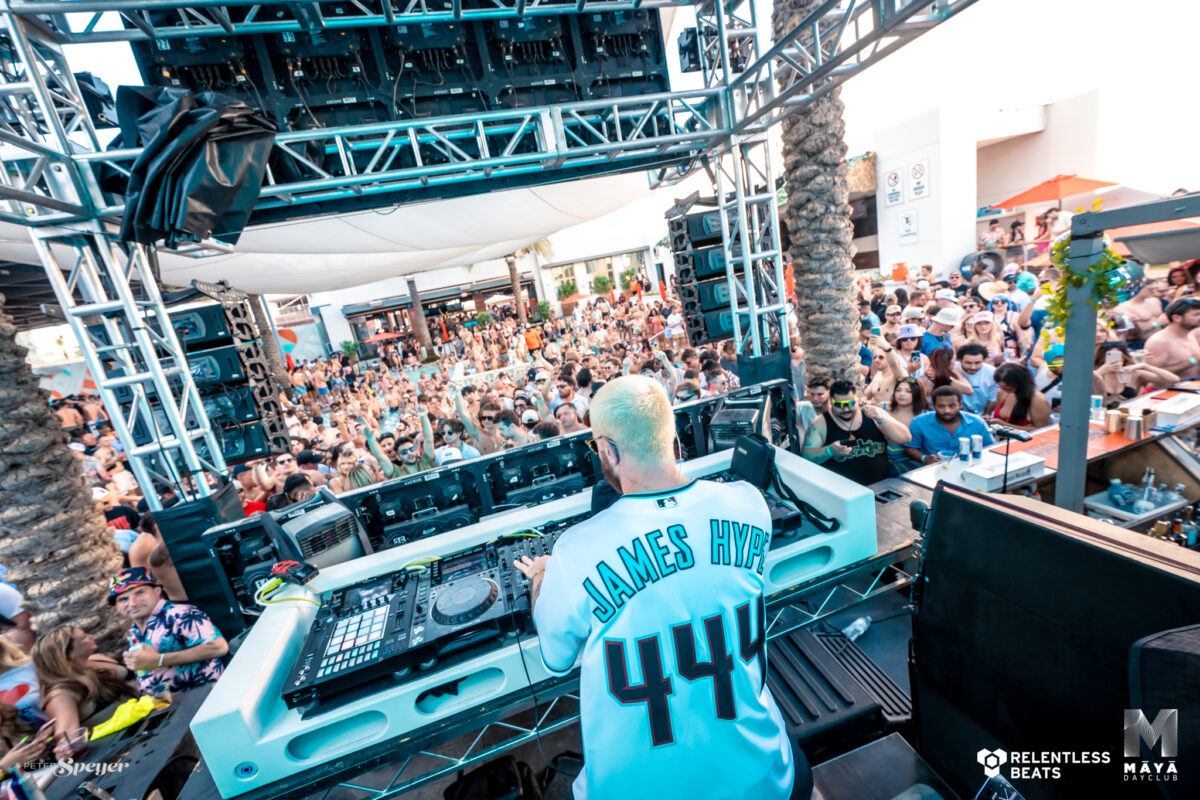
Here’s the truth: almost all DJ sets are pre-planned to some extent. DJs often pre-map cue points, loops, and transitions in Rekordbox or Ableton to deliver a polished performance. This isn’t “cheating”—it’s preparation.
Afrojack has been transparent about balancing pre-planned structure with live spontaneity. “When I have to play Tomorrowland, I have an hour. If I don’t plan it properly, I could forget to play ‘Ten Feet Tall.’ Being a respected artist booked on such a big stage, it’s my responsibility to prepare a set that gives fans everything they expect of me.”
But he also emphasized the live complexity behind his sets: “I was playing four decks—three records at the same time—acapella, samples, loop, re-loop, pitch up, woop, echo, go! ‘3-2-1-go,’ on the mic—all that stuff. And the only thing I read back on 1001Tracklists is ‘Afrojack mashup.’”
Preparation doesn’t mean faking it—it means being ready to take risks, experiment, and deliver a live experience. Imagine if your favorite athlete sat out the championship game because they didn’t want to mess up. Fans deserve more than that.
Fans spend hundreds—sometimes thousands—on tickets, travel, and festivals. Is that experience compromised by a pre-recorded set?
It’s easy to compare this to pop artists lip-syncing. Is it the same, worse, or different? David Guetta offered his perspective in a WIRED Tech Support interview:
“I never played a pre-recorded set. I hear so much about those stories—I think it’s ridiculous, because beat matching is so easy. I can teach a kid that is 10 years old how to beat match in a couple of hours. So, I don’t know why people are talking about this.”
Guetta added that preparation doesn’t remove flexibility: “Let’s say I’m playing my set that I prepared, but I see that when I play an underground record, they’re really into it. I have my underground playlist, I’m gonna add some of this.”
That’s the standard fans should expect—attention to detail, respect for the culture, and adaptability in the moment. If we only wanted a vibe, we’d settle for cover bands or DJ imitators. Fans pay for a live connection, not a playback because we have jukeboxes for that.

The best DJs spend hours building sets that match the energy of a festival. Whether opening or headlining, your job is to move the crowd. That pre-show pressure? That’s part of the artistry.
Yes, tour fatigue is real—some DJs play five or more sets across the globe in a single weekend. But leaning too heavily on pre-recorded sets risks undermining the live spirit that makes dance music culture so powerful.
Technology will continue to evolve, and DJs will always use tools to bend genres and streamline their craft. But the difference between preparation and pre-recording is the difference between integrity and a shortcut.
At the end of the day, fans aren’t paying for perfection. They’re paying for authenticity.
What do you think—are pre-recorded sets the ultimate sin in EDM, or just part of the game? Let us know in the comments below and join the conversation
Copyright © 2026 Relentless Beats LLC. All rights reserved.
Use of this site constitutes acceptance of our terms & conditions and privacy policy.