Why Some Drops Feel Like Closure and Others Feel Like Release
April 2, 2026
April 2, 2026

 Crankdat
 Breakaway Arizona 2026
 drinkurwater
 Goldrush: Midnight Riders 2026
 Coconino Campout 2026
 Effin
Effin AYYBO
AYYBO Grabbitz
 Obsidian 2025
 Danny Avila
 Same Same But Different Reveals SUBmerged Event Lineup
 Stab Leans Into the Dancefloor on New Single, 'It's On You'
 RB Exclusive Interview: Odd Mob on Musical Impact, Celebrity Status, & Humility
 GRiZ Unveils 'All I Need,' a Golden Hour Groove That Feels Like Summer
 Why Some Drops Feel Like Closure and Others Feel Like Release
 Capozzi
 ISOxo
ISOxo Bella Renee
 Yetep
Yetep
Backstage at Warehouse 215, tucked away from the thrum of a packed out crowd, Harry Hope is remarkably still. He’s spent the last handful of years evolving the Odd Mob project from an Australian underground fixture into a ubiquitous global presence, yet he carries himself with a grounded sincerity that feels detached from his trajectory. He isn’t particularly interested in the spotlight, or the performative side of the trade. Instead, he seems driven by a quiet focus on the technical growth of his sound. In the minutes before he stepped out to headline the Phoenix Warehouse Project’s two-year anniversary event, I sat down with Harry to discuss his recent shift toward more melodic exploration and why he is consciously choosing to prioritize the messy trial-and-error of his craft over the hollow allure of modern celebrity status.
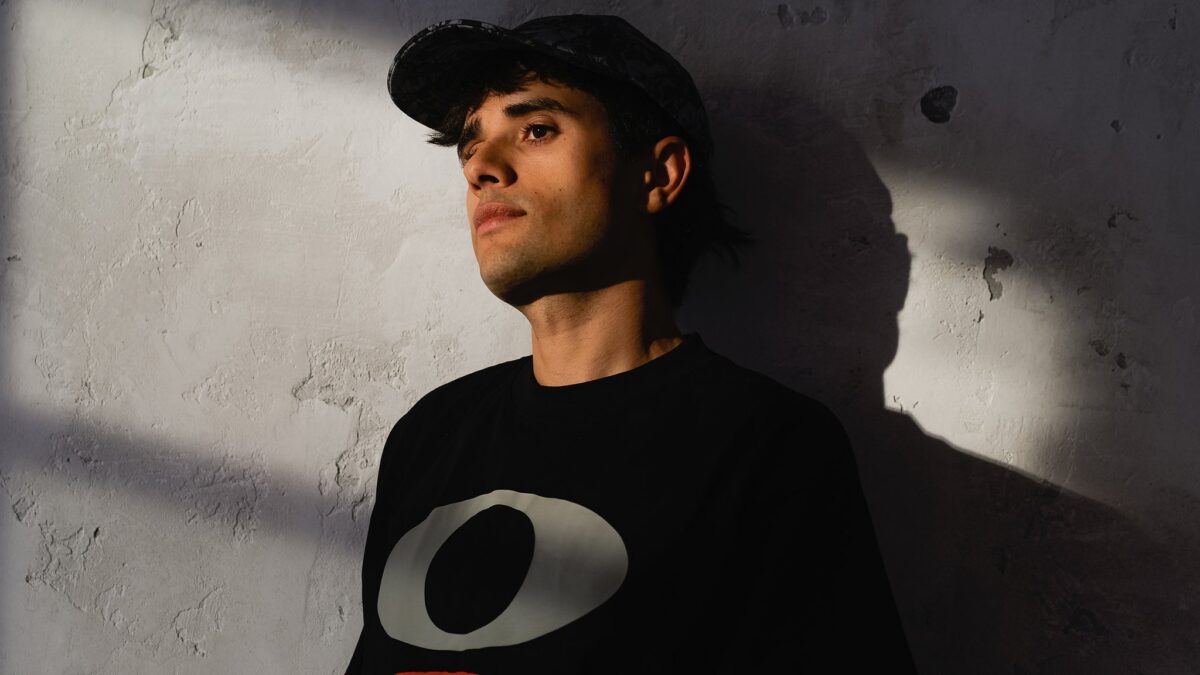
Long before he was commanding the world’s largest festival stages, Harry was navigating the unglamourous world of mobile DJing, a path that began with a mandatory push from his mother. Growing up in Brisbane, he was voluntold to host a school talent show, an experience he remembers as a forced first venture onto the stage. “My mum, being a typical Sri Lankan parent, told me, ‘You’re gonna be the MC for this event because it’ll be good character building for you to talk in front of people.'” That performance caught the eye of a local business owner who wasn’t looking for a wizard behind the decks, but rather a kid who could handle a room. Harry found himself recruited into a world of mobile DJing where his value lay in his voice and his willingness to “lug all the gear around” for weddings and birthdays. Reflecting on the pragmatism of those early gigs, he notes, “It worked for me as a mobile DJ, because at weddings, with the setup they had, you’re literally just playing music, no mixing.”
The shift from merely playing tracks to obsessively deconstructing them arrived with the rise of the early 2010s dubstep wave, specifically through the release of Skrillex’s “Rock n’ Roll.” Harry found himself transfixed by the complexity of the production. “I fully obsessed over that song for months, like I just kept playing it again, and again, and again because I couldn’t figure out how you could piece all those little bits together like that,” he says, recalling the spark that first ignited his interest in sound design. This technical fascination grew alongside his experiences as a fan during a prolific time in the Australian festival circuit. Looking back at the massive bills, he admits, “We did all these like sick mega festivals, like you look at the lineups now and it’s like Calvin Harris, Porter Robinson, Squirrel X, like just so many names now that would never be on one lineup, but back then we had it so good.”

The same curiosity he had back then defines his current work, most recently evidenced by his first headline set at Club Space. For Harry, playing Space wasn’t just another booking. “I’d been collecting tunes for that set specifically for over six months, ever since I found out I was going headline,” he explains. “I kind of shifted my whole Spotify algorithm. For a while there, I was seeking out more left field and deeper cuts outside my normal.” His set began with minimal tech, then from UK house to his signature bass heavy style, and finally high BPM, percussive hardgroove to cap off a four hour slot, a luxury of time that allowed him to truly explore. “I think I was really able to paint a picture,” he notes.
That level of control extends beyond his tracklists and into the mundane logistics of the brand itself. While many artists of his stature employ a small army to manage their digital presence, Harry remains deeply involved in the granular details of his output, often at the mercy of his touring schedule. “I’m just so slow with getting back to the video guys with the time stamps for the cut downs that I want,” he admits, explaining the delay in his social media highlights. “And it’s a huge video file, so it’s kind of awkward to do it while I’m on crappy airport hotel Wi-Fi or whatever.” This refusal to distance himself from the work reflects a broader resistance to the curated facade that many of his peers have adopted as their primary currency.
This groundedness borders on a sort of apathy to participate in the modern DJ/ influencer machine. “I’ve realized I’m not that type of person. I don’t want to be the next Dom Dolla or John Summit where I push everything to the side and just tour, tour, tour or focus on my like body image and all these things that play a part in becoming a celebrity status DJ,” he explains. For him, the peak experience of being a producer is the goal to push the ceiling of creative sound design. “I get so much joy out of making new sounds and having that feeling that you’ve made something that might not have ever been heard before. I think that’s the coolest part about dance music, sound design or like strange chord progressions. Because there’s so many different variables, anyone could just sit down and just happen to drag a weird sample into the wrong place or something.”
This headspace has occasionally led to a disconnect between Harry’s perception of his work and the effect it has on his listeners. He recently encountered a fan who found healing for personal trauma through his music, a revelation that shifted his perspective on his track “Never Alone.” “I personally didn’t think that any of my music was actually really good or deep enough to have that impact on people,” he admits. He attributes this mindset partly to a cultural quirk in Australia where “It’s kind of cringe to try too hard or look like you think that you’re good,” a mindset known as “Tall Poppy Syndrome.” Being neighbors with Fisher on the Gold Coast of Australia, he views even the biggest in the business as “just some guy,” a philosophy he applies to himself.
When he isn’t in the studio, Harry’s life is defined by domestic pursuits that keep him tethered to the real world. He spends his downtime hunting for rare Pokémon cards on eBay or tending to a garden fertilized with the remnants of his fishing trips. “If I catch anything that we’re gonna eat, I do the whole no waste thing, it’s kind of gross… but I bury the carcass in the ground,” he laughs, noting that he planted cherry tomatoes on top that are now growing out of control.
Ultimately, Harry Hope remains an artist who would rather be a student than a star. Even his hypothetical fallback plans are rooted in a curious, entrepreneurial spirit. “To be honest if I had to stop the music thing, I’d probably turn into some sort of startup bro,” he muses, mentioning a recent $100 subscription he paid just to make an image of a vinyl spin on his computer screen. “There’s somebody who’s probably making like a full-time wage off this website that just makes an image spin around, that’s kind of sick.”
As he prepares to step out into the lights, it is clear that Odd Mob isn’t interested in being the face of a movement, he’d much rather be the guy in the back, meticulously adjusting the knobs, forever convinced he still has everything to learn.
Connect with Odd Mob: Facebook | Instagram | X | Spotify | SoundCloud
Copyright © 2026 Relentless Beats LLC. All rights reserved.
Use of this site constitutes acceptance of our terms & conditions and privacy policy.