



GRiZ Unveils ‘All I Need,’ a Golden Hour Groove That Feels Like Summer
April 1, 2026
April 1, 2026

 Crankdat
 Breakaway Arizona 2026
 Valentino Khan
 Goldrush: Midnight Riders 2026
 Blossom
 AYYBO
AYYBO Grabbitz
 Obsidian 2025
 Effin
Effin Danny Avila
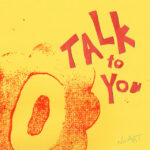 ANOTR Releases 'Talk To You' With 54 Ultra
 Liquid Stranger & AVELLO Turn Bass Into Pure Magic on New 'Crush' Collab
 Zeds Dead, Subtronics, & Tape B Release 'Word Scramble'
 GRiZ Unveils 'All I Need,' a Golden Hour Groove That Feels Like Summer
 John Summit & The Chainsmokers Just Gave Us the Best of Both Worlds
 Capozzi
 ISOxo
ISOxo Bella Renee
 Yetep
Yetep
Not all drops hit the same. Some feel like an exhale you didn’t realize you were holding, while others feel like something cracking open inside your chest. Same structure, same build, same moment of impact, but completely different emotional outcomes. That difference comes down to something deeper than sound design. It’s psychology.
Every drop is built on tension and payoff, but not all tension is created equally. Some tracks spend their entire build creating a sense of resolution. The chords feel familiar, the melody hints at where it’s going, and you can almost predict the emotional landing before it happens. When the drop finally arrives, it feels like closure. Everything clicks into place, the tension dissolves cleanly, and the brain rewards that predictability with satisfaction, a kind of emotional “yes, that’s exactly where this was supposed to go.” These are the drops that make people smile, nod, and sink into the moment rather than explode out of it. They complete something.

Other drops take a different path. Instead of guiding you toward a clear resolution, they stretch the tension further than expected. The build feels uncertain, the melody might feel unresolved or even slightly uncomfortable, and there’s a sense that something is being held back just long enough to make you question what’s coming next. Then the drop hits, and instead of resolving the tension, it releases it. These are the moments where the crowd screams without thinking, where bodies move instinctively, and where the reaction feels less controlled and more physical. The brain isn’t just recognizing a pattern. It’s reacting to a sudden shift in energy. That’s the release.

From a neurological standpoint, both experiences activate reward systems, but in different ways. Closure leans on expectation. The brain predicts an outcome and feels satisfied when that prediction is met. Release leans on surprise and intensity. The brain reacts to the unexpected and floods the body with energy in response. That’s why one drop can feel calming while another feels explosive, even if they exist at the same tempo.
Sound design plays a role, too. Softer chords, melodic progressions, and warmer tones tend to guide listeners toward that feeling of closure, while harder basslines, sharper transitions, and abrupt changes in rhythm tend to trigger release. But it’s never just about the sounds themselves. It’s about how they’re introduced. A long, emotional build with layered vocals might set up a drop that feels like a conclusion, something reflective and almost cinematic. A minimal, tension-heavy build with repetitive elements might set up a drop that feels like a break in pressure, something raw and immediate.

And the crowd responds accordingly. You can see it in real time. Some drops pull people inward, eyes closed, hands over hearts, while others send people outward, jumping, shouting, losing themselves in the movement. Both are powerful. Both are necessary. Because dance music isn’t just about energy, it’s about emotional range, the ability to move between tension, release, reflection, and connection within the same set.
Maybe that’s why certain drops stay with people long after the night ends. Not because they sounded the biggest, but because they gave the exact emotional response the body didn’t know it needed.



Copyright © 2026 Relentless Beats LLC. All rights reserved.
Use of this site constitutes acceptance of our terms & conditions and privacy policy.